


I was a journalist for more than a decade, so I know how to pitch. And what gets covered most easily? News.
I planned my early slate of We Are Spiraling episodes with that in mind, aiming to publish my most newsworthy guests in the first handful of episodes. That’s how I landed We Are Spiraling in the New York Times within two weeks after launch – every founder’s dream.
But what most founders don’t realize is that while early press wins can offer validation, they do not always drive tangible business outcomes. The same squeeze could offer a lot more juice later in your lifecycle.
I say this as someone who has been a journalist, founder and comms adviser. Everyone wants validation and recognition as soon as possible, but you make a sacrifice when you achieve it too early.
This post outlines the pros and cons of early press, and how to determine the right moment that will drive real business results for you. I already shared the cold pitch that got us into the NYT and We Are Spiraling’s viral moment with Business Insider. Now I’ll detail what happened afterward and what I’d do differently now.
The episode that got us major press coverage was my interview with Debbie Wasserman Schultz, the congresswoman from Florida and former head of the Democratic National Committee. I’m going to skip the part about how I got the story into Insider and NYT because you can read that via the links above. Listen to the interview here if you haven’t yet:
We’re going straight to impact and how I view those press wins now, in chronological order.
Defining Business Value/ROI
To know what type of media/press to pursue, you have to first decide what audience you’re trying to reach. More on that in this previous post about the art of finding your message (and your medium).
Defining the business outcomes you want will help you figure out your audience. My goals for We Are Spiraling, at that very early stage, were not rocket science.
Get the show in front of more eyeballs – ideally the right eyeballs – so people know it exists.
Establish credibility.
Demonstrate that We Are Spiraling is real journalism, no matter how many dudes ask me how I’ll come up with enough stories to make this a thing. By the way, go ahead. Dare me. I may not work in a traditional newsroom anymore, but I remain a reporter at heart. I will have story ideas forever.
Show future guests it is worth sharing their time with us because we have conversations nobody else is having, and that they’ll spread.
Prove that our stories are for everyone. Not just people with curly hair. Are cooking shows only for chefs?
From here, we have some obvious, easy ways to assess these business outcomes.
Podcast metrics: listens, followers, listeners
Social media: followers, reposts
Substack subscribers: free, paid
I’m skipping over things like page views on the We Are Spiraling post about this episode, since there were plenty of direct metrics.
Business Insider
The Tuesday before last Thanksgiving, Sarah Needleman at BI reached out to let me know her story about WAS’s interview with Wasserman Schultz had risen to No. 2 on the website. Then it jumped to No. 1.
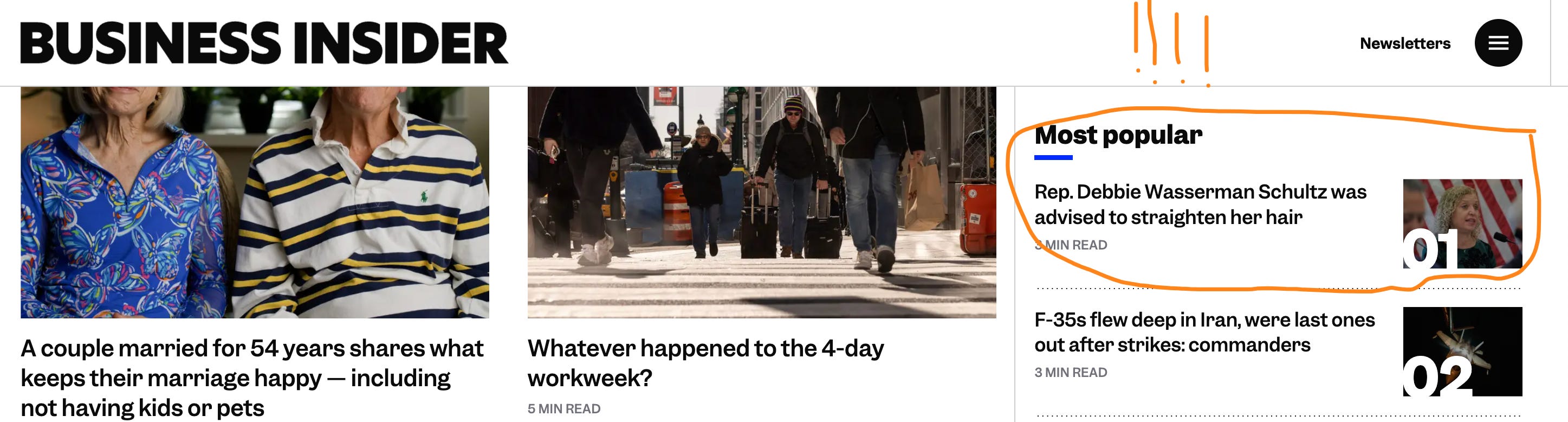
The thing about Insider coverage is it often aggregates so much of the story that…unless you really want the deats and the texture, you’re good after reading the summary.
Which made the results a mixed bag. On the one hand, the story went so gangbusters that they did a whole second story about why I started We Are Spiraling. I am so grateful, and of course that’s a huge win for the show’s brand.
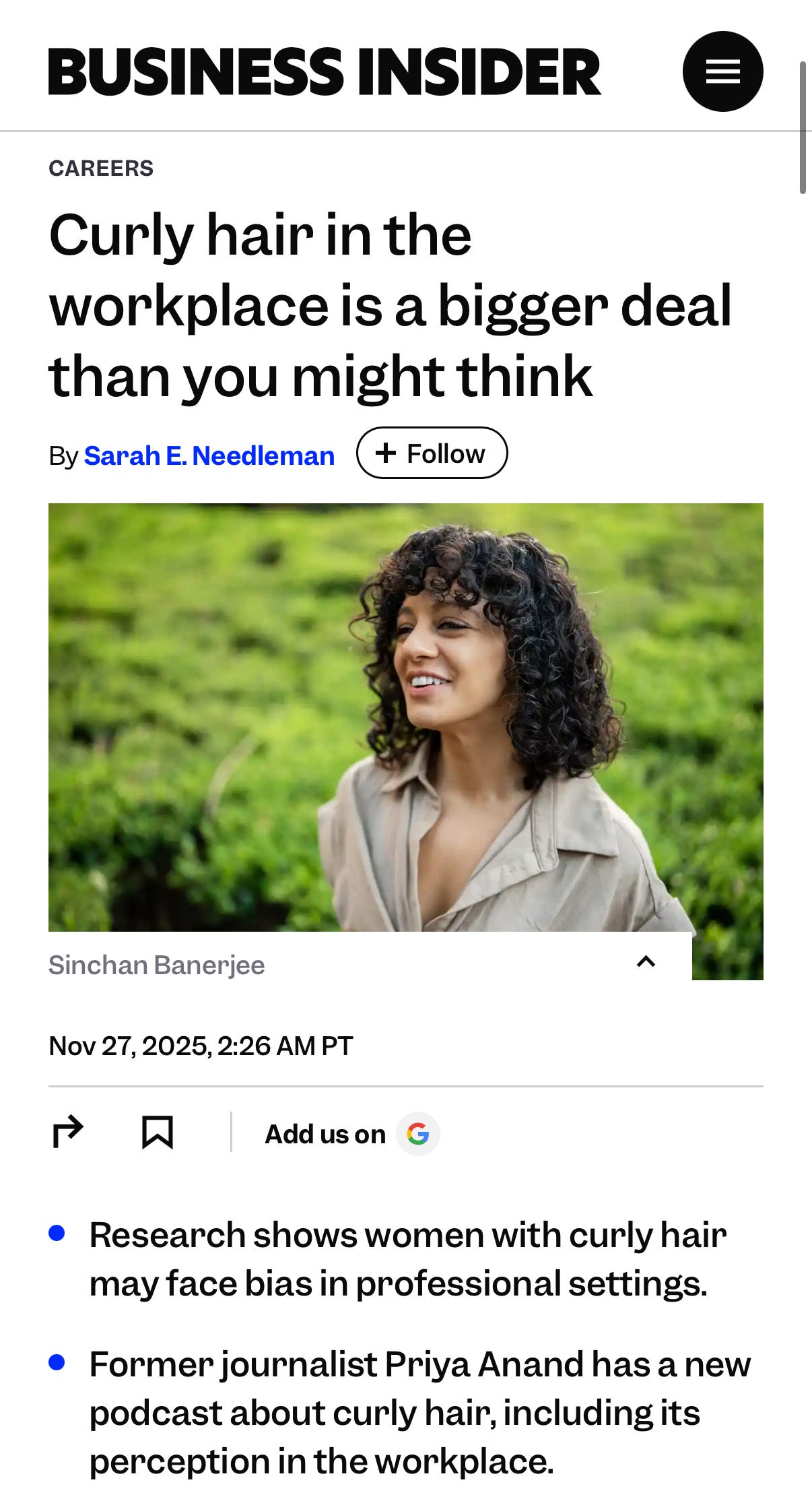
But very few people became subscribers of this newsletter despite the traffic BI received to its own site.
Win: brand boost
Miss: real ROI
Unknowns: how many of our listeners or readers actually discovered the show via the BI articles, and are still listening/reading now. (If that’s you, please leave a comment or message me!)
New York Times
Vanessa Friedman, chief fashion critic for the Times, told me the newsletter including WAS would publish the Friday right after Thanksgiving.
I knew it had gone live when I opened an email about a new subscriber and immediately saw another new sub notification pop up in the chain. I checked my email, and there it was.
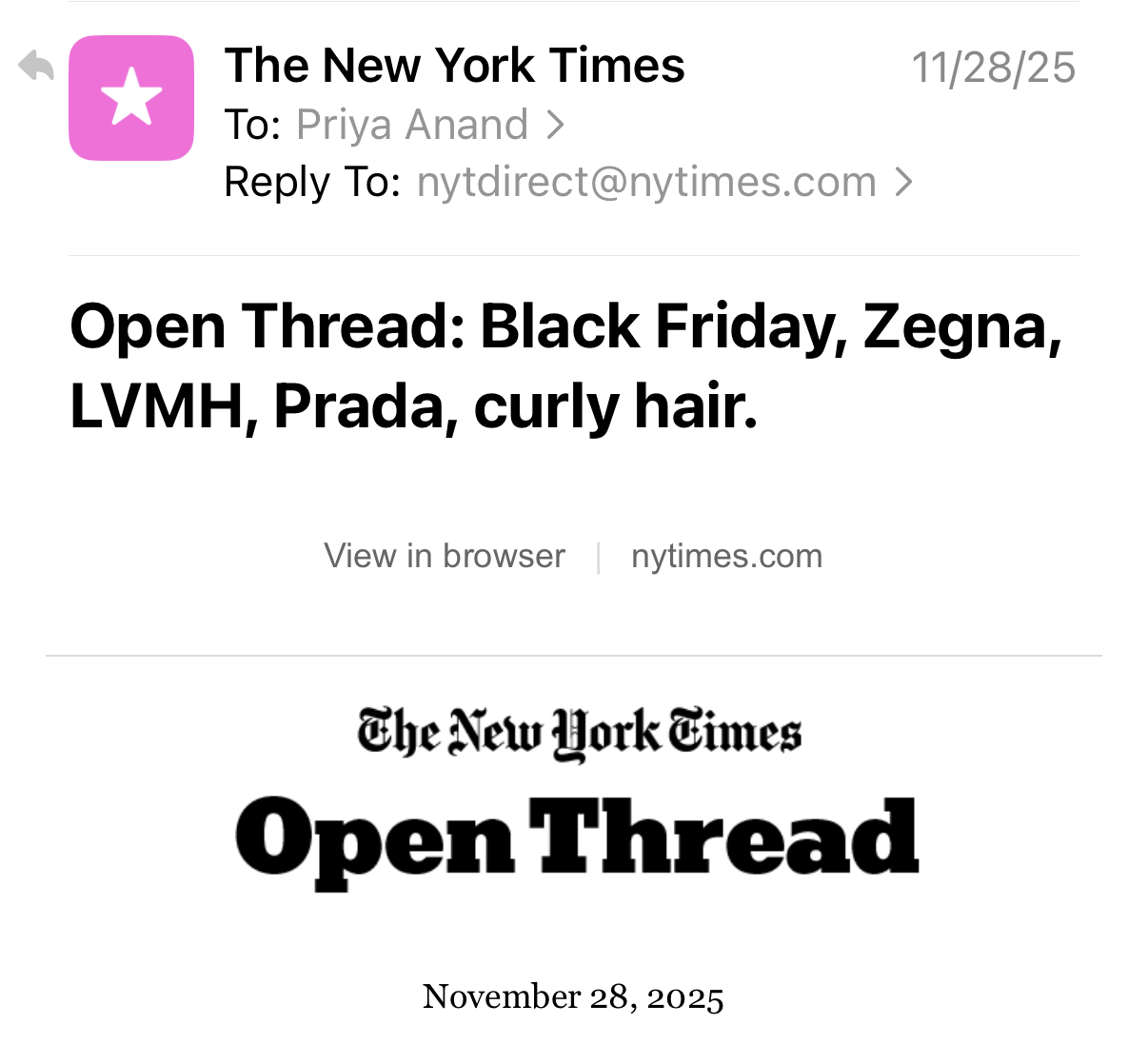
Curly hair. Right after Prada in the subject line. That’s me! That’s us!
At least a few dozen subs came in within a few hours. It could be that some of those readers discovered the BI stories from a few days earlier, but the timing seemed pretty clear. BI got a lot of traffic (to its own site), but the NYT subs were more dedicated to actually paying attention and went the extra click to this website.
In terms of listenership: I was mostly only promoting the Apple Podcasts show link for the first few months. We got a few hundred new followers of the show in December, and new listeners in the thousands.
As you know, the podcasting apps serve you stuff you’ve engaged with already, so pure follower metrics don’t matter as much. (That said: they help us with the algorithms a lot so please go follow WAS in your podcasting apps if you haven’t yet!)
Because the BI and NYT stories both came out the last week of November, and people don’t immediately tune into a podcast after discovering it, it’s difficult to discern which article contributed to a boost in listeners in January.
We also received some love from the Apple Podcasts editorial team, with promo on the new shows page. I’d bet that did just as much for listenership as the articles did in aggregate, if not more, because people finding us through the podcast app were probably in the process of picking something to turn on.
Getting featured by the New York Times two weeks into the show’s life was obviously a massive win. You’re probably wondering what kind of downside I can even come up with here.
Well. It was so early in the show’s life that I barely had a handful of pieces up on WeAreSpiraling.com. Thousands of people visited this website in November and December. If I had held my most newsworthy episode longer and had a larger back catalogue of content, would more of them have subscribed? What if I had more pieces in the bank before we launched, to give more visitors a sense of what We Are Spiraling is all about? What if the episode with the congresswoman was episode 5 instead of episode 3?
I’ll never know. I have to live with the fact that I may have been able to squeeze so much more juice out of coverage in the NYT than I actually did.
I know this might sound absurd. Your podcast with no ad budget was featured in the NYT. What more could you want?
I learned an important lesson firsthand. Timing is everything.
Win: brand boost, visibility
Miss: inefficiency
Unknowns: if the inefficiency even matters, given the ongoing brand boost if someone Googles the show
Lastly, the most important takeaway. One thing I’ve seen as a journalist and comms adviser is that many founders overestimate how much press coverage will help them. The real work of building your business, whatever it may be, is often still a brick-by-brick effort in the following days, weeks, months, years.
I am certain at least some of you found We Are Spiraling (and MAYURA?) thanks to the New York Times and Business Insider. But I know many of you also discovered the show thanks to the pod apps’ discovery mechanisms, or social media clips, or through flyers I post around San Francisco.
And most guests who agree to come on the show? I think they’re like the congresswoman. They say yes because the premise of We Are Spiraling is something they believe in. They feel seen by the interview request. They have never been asked before how their hair influences their identity and their lives. They want to share why they believe hair is an extension of your spirit.
As a former reporter, I very much believe in the power of journalism. But don’t overestimate the true business ROI of press coverage. And weigh this every time: are you looking for a brand boost or optimizing for business results? Or are you simply hoping for validation?
Validation is temporary. True gratification and progress will come from your listeners, your readers, your community, your customers. It comes from messages from people who feel your work is bringing them something they needed, even if they didn’t realize it before it existed.
Please reply to this email or drop a comment to let me know how you found We Are Spiraling. And follow us on Instagram for bonus clips that didn’t make it into our episodes.